What is Asset Lifecycle Management? How AI Extends Asset Life and Informs Capital Planning
Key takeaways:
Asset lifecycle management tracks building equipment from installation through replacement, using AI and condition data to predict when systems require repairs or replacement.
CRE firms need asset lifecycle management software to capture the condition trends and performance data required support tenant experience and strategic decision-making.
Visitt's AI applies predictive maintenance models to detect when repair costs exceed replacement value, supporting capital planning decisions with live operational data across portfolios.
What is asset lifecycle management?
Asset lifecycle management is a systematic process that tracks building equipment and systems from installation through replacement. Asset lifecycle management solutions for commercial real estate (CRE) portfolios use AI and live performance assessments to predict when systems require repairs or replacement and what they will cost, supporting:
- Equipment maintenance
- Commercial real estate property management
- Property valuations
- Capital planning
- Refinancing decisions
- Investor reporting
- Acquisition due diligence
- Asset transfers
CRE portfolios contain thousands of assets affecting building operations, compliance, risk management, and tenant experience, including:
- HVAC and mechanical systems
- Electrical and power distribution systems
- Plumbing infrastructure
- Fire and life safety systems
- Vertical transportation systems
- Roofing and building envelope systems
- Structural and parking assets
- Building access control and security systems
- Amenity equipment
- IT and network infrastructure
- Furniture, fixtures, and other operational equipment
What does asset lifecycle management track for CRE firms?
Digital asset lifecycle management activities include:
- Establishing baseline condition data at installation with manufacturer specifications and warranty terms
- Commissioning results from commercial property inspections
- Generating and tracking preventive maintenance schedules through CMMS and work order management platforms based on manufacturer requirements and historical failure patterns
- Conducting periodic condition assessments through facility management workflows that score each asset and reveal degradation rates
- Analyzing repair costs against replacement timing using commercial real estate data analytics to identify optimal capital planning decisions
- Building multi-year capital expenditure forecasts backed by documented condition data to support property management KPIs
- Producing asset condition packages for property sales, refinancing, or insurance renewals
What are the different asset management lifecycle phases?
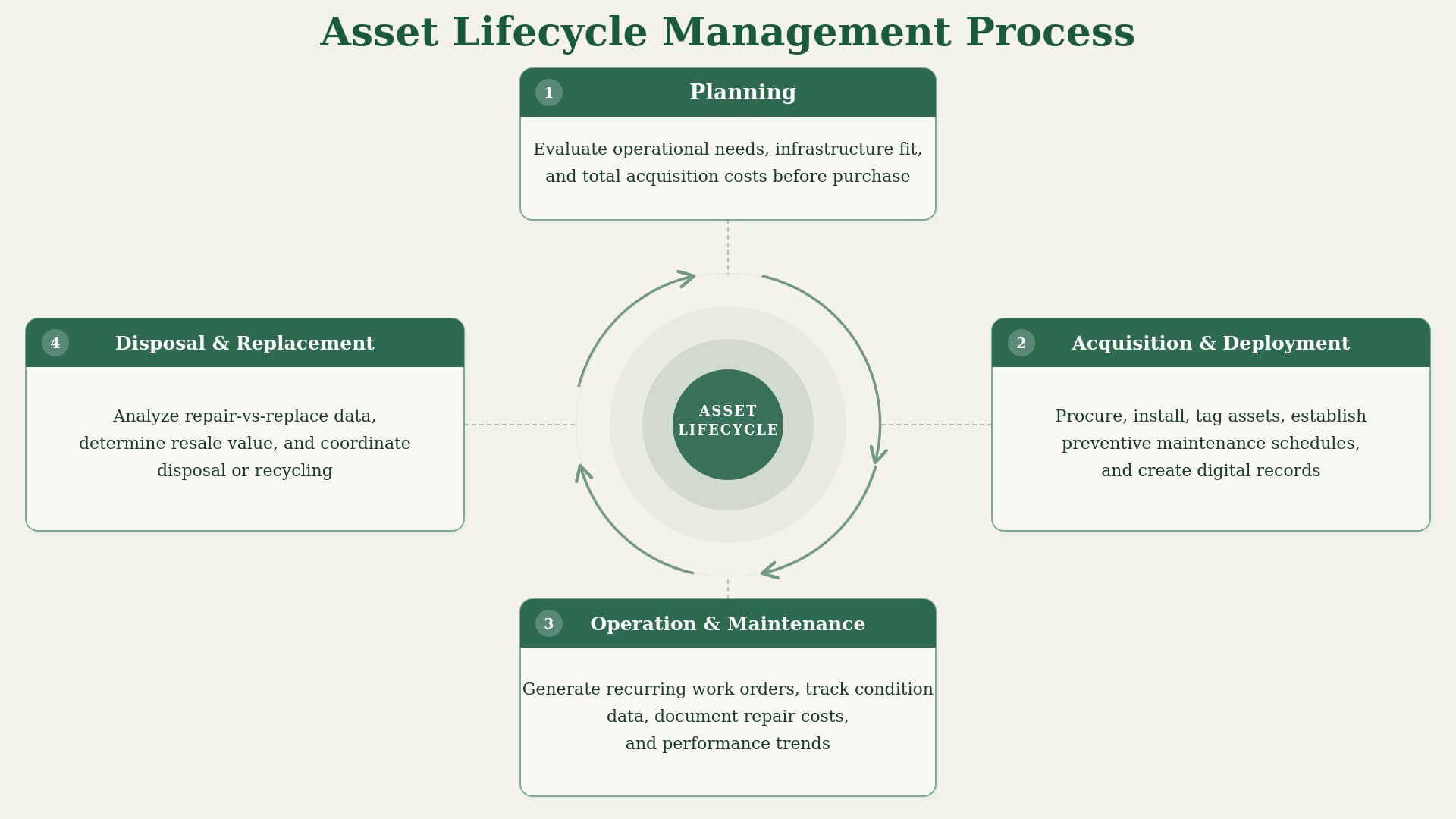
The asset lifecycle is the series of operational stages that building equipment passes through from acquisition to disposal. The lifecycle typically spans four main phases:
- Planning: Property teams evaluate whether new equipment addresses operational needs, fits existing infrastructure, and justifies acquisition costs, including installation, equipment maintenance, spare parts, and projected degradation, before making any purchases.
- Acquisition: Teams procure equipment, coordinate delivery and installation, conduct commissioning tests, apply physical tags that link to digital records through an asset tagging system, enter asset details into the AI property management software, establish preventive maintenance schedules, and create digital records capturing warranty coverage, manufacturer specifications, and expected operational lifespan.
- Operation and maintenance: Preventive maintenance software generates recurring work orders based on time intervals or equipment usage thresholds while technicians scan tagged assets through the asset tagging system to document completion data, condition findings, and repair costs that feed into the asset's operational history.
- Disposal and replacement: Commercial property inspections capture photos and performance readings that reveal deterioration patterns. Asset lifecycle management software analyzes this data to calculate when repair costs exceed replacement value, helping property teams determine whether assets retain resale value, require specialized disposal services due to regulatory requirements, or should be recycled for component materials.
Why does your CRE firm need asset lifecycle management software?
Deloitte's 2026 Commercial Real Estate Outlook shows that 80% of a commercial building's total lifecycle cost occurs during operations rather than initial construction, while properties without documented maintenance programs experience 20% property value decline within 5 years. Every dollar of deferred maintenance becomes four dollars in capital repair costs when systems reach failure, yet fragmented systems and data silos prevent property teams from capturing the condition trends and performance data needed for accurate capital planning.
With over 50% of CRE firms facing property loan maturity in the coming year, and appraisers and lenders discounting property values when asset condition documentation is absent or incomplete, asset lifecycle tracking is more critical for refinancing and valuations than ever. The asset lifecycle management process generates the documentation that supports property valuations and accelerates due diligence timelines during refinancing, while capital planning is backed by relevant performance data across asset management lifecycle phases.
How is asset lifecycle management software used by CRE firms?
Property teams use asset lifecycle management software to implement asset lifecycle management best practices that extend equipment service life and improve capital planning, compliance, and risk management decisions.
Planning capital investments
Asset lifecycle management software analyzes condition scores, repair costs, and performance trends to predict when equipment requires replacement, allowing property teams to proactively plan capital expenditures during budget cycles. Teams achieve this through practices that include:
- Scheduling periodic condition assessments to compare wear to manufacturer estimates
- Calculating repair-versus-replace inflection points where accumulated maintenance costs exceed amortized replacement value
- Building five-year and ten-year capital forecasts that align replacement timing with planned service windows and available financing
Extending the equipment’s operational life
When executed consistently, preventive maintenance keeps equipment operating within performance parameters longer. Teams optimize asset lifespan through practices that include:
- Monitoring work order completion rates and service frequency
- Adjusting maintenance intervals based on equipment runtime hours, cycle counts, and usage intensity
- Applying predictive maintenance insights from performance data to address component wear before failures force reactive repairs
Reducing unplanned downtime
Unplanned equipment downtime disrupts tenant solutions workflows and drives commercial property maintenance costs significantly higher than scheduled service executed during planned intervals. Teams reduce downtime through practices that include:
- Analyzing work order histories to identify equipment generating repeated service calls that signal deteriorating conditions
- Routing technicians with complete asset context, including past repairs, parts replaced, and recurring issues, to improve first-time fix rates
- Escalating equipment showing abnormal performance patterns through incident reporting software before failures occur during peak occupancy
- Tracking mean time between failures across similar assets to optimize maintenance timing and identify outliers requiring immediate attention
Supporting compliance and audit readiness
Lenders, insurers, and regulators require documented proof that building systems receive proper maintenance and meet safety standards throughout their operational life. Teams maintain compliance through practices that include:
- Storing inspection reports and certifications with timestamps that prove when assets received required service
- Maintaining vendor COI records and contractor certifications within document management systems that alert on impending coverage expiries
- Generating audit reports showing completed inspections, corrective actions taken, and current equipment condition
- Tracking warranty periods and claim deadlines to ensure defects are addressed on time
What does asset lifecycle management look like with Visitt?
Visitt tracks assets from installation through replacement within the same centralized platform teams use for all their daily building operations. When new building systems and equipment are installed, property teams create digital records documenting warranty coverage, manufacturer specifications, and expected operational lifespan from the installation date forward. Every work order, commercial property inspection, and equipment maintenance task that follows directly connects to that asset record, building the operational history that reveals performance and compares it to the asset’s total cost of ownership:
- Teams see the equipment's complete operational history, including scheduled and completed maintenance, vendor service records, and performance trends
- Preventive maintenance software generates recurring tasks based on time intervals or equipment usage to extend equipment life and reduce premature replacements
- Work order management centralizes maintenance requests and tracks them through completion, with data feeding back into the asset timeline to show service frequency and repair costs
- Mobile inspections let field teams document equipment condition on-site through photos and performance readings
- Vendor management tracks the entire service provider lifecycle from initial bids through contract compliance, ensuring vendors meet requirements throughout the asset's operational life
- Findings are immediately visible in the asset's history, so property teams can track deterioration patterns that signal approaching end-of-life thresholds
Visitt's AI analyzes this accumulated data through predictive maintenance models and work order intelligence that detect when repair costs exceed normal thresholds or when performance signals are approaching failure, supporting capital planning decisions with live operational data.
See how Visitt manages asset lifecycle data across your portfolio.