What is Preventive Maintenance Software? How it Keeps Building Assets Running Smoothly Across Portfolios
Key takeaways:
Preventive maintenance software automates recurring inspections and work order generation across commercial portfolios, reducing emergency repairs through scheduled service intervals that extend asset life and protect property valuations.
Research demonstrates preventive maintenance delivers a 545% ROI over 25 years, while deferred maintenance costs compound at 7% annually, with every postponed dollar requiring four dollars in future capital renewal.
Visitt's preventive maintenance platform uses AI to interpret inspection data and equipment patterns, helping property teams prevent breakdowns through centralized workflows and portfolio-wide performance benchmarking.
What is preventive maintenance software?
Preventive maintenance software is a digital platform that automates the scheduling, execution, inspection, and documentation of recurring maintenance tasks across commercial real estate (CRE) portfolios. The software tracks equipment performance over its full lifecycle while helping property teams manage recurring service through preventive maintenance tools, with software preventive maintenance examples ranging from comprehensive CMMS platforms to specialized scheduling systems that generate work orders based on:
- Time intervals
- Equipment usage thresholds
- Manufacturer requirements
In doing so, they ensure HVAC systems, elevators, fire safety equipment, and other building infrastructure receive service before failures occur.
Preventive maintenance system features
Modern PropTech platforms use AI interfaces to add a proactive edge to preventive maintenance tool features:
- Automated scheduling engines prompt work order management systems to create and route tasks to technicians based on skills, location, and workload
- Asset tracking systems maintain equipment histories showing past repairs and service costs
- Mobile access for field teams capture photos, videos, QR scans, and numeric readings during commercial property inspections
- Notification systems send alerts when maintenance windows approach or when tasks become overdue
- Inventory management tracks parts required for scheduled tasks and triggers purchase orders when stock falls below thresholds
- Reporting dashboards analyze completion rates, response times, and asset/amenity performance across portfolios through commercial real estate data analytics
- Document management stores manuals, certifications, and COIs with automated expiration reminders
- Integration with AI property management software and other building operations platforms
How does preventive maintenance software work?
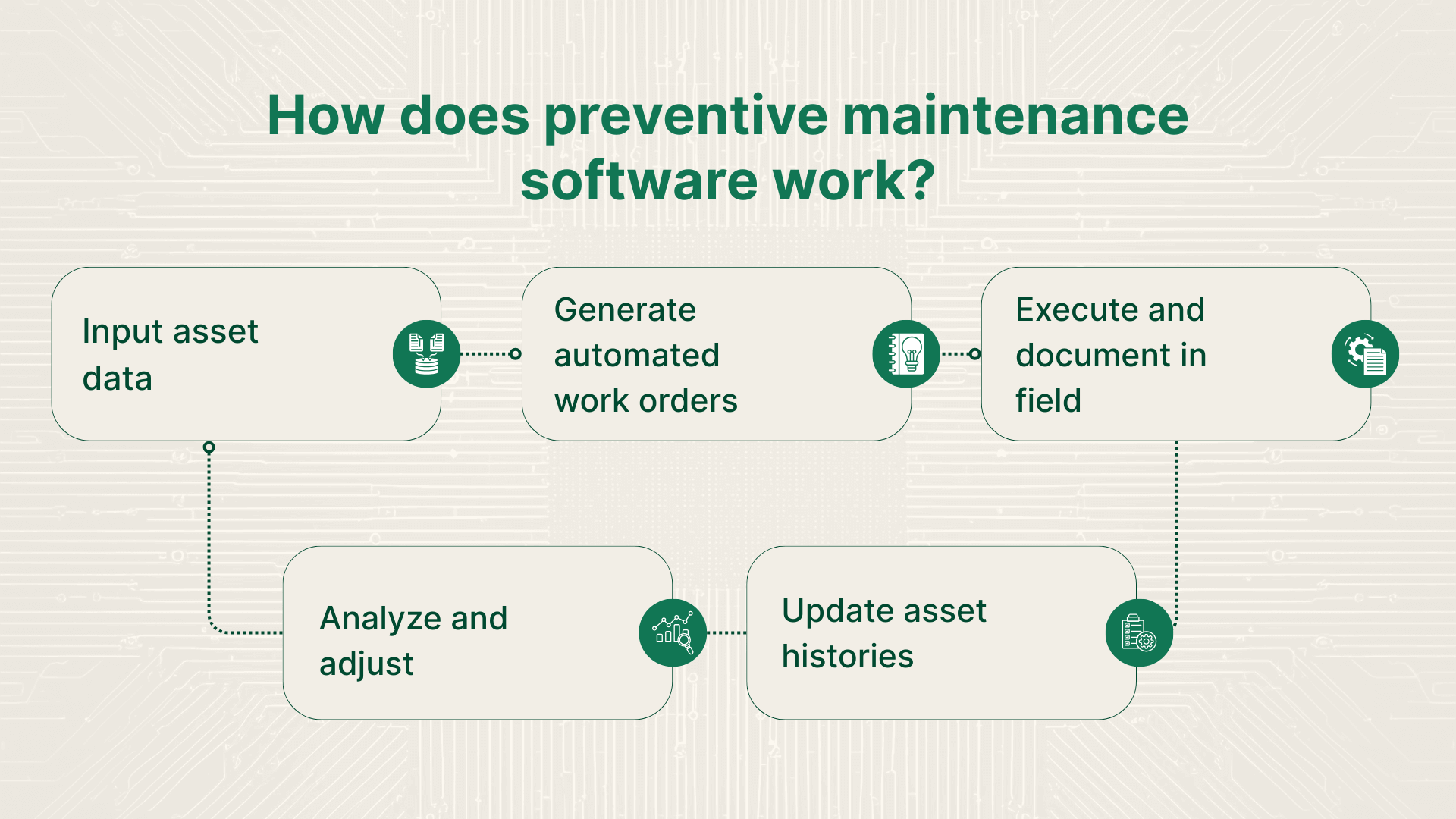
Preventing equipment breakdowns and service disruptions requires continuous monitoring and coordination between scheduled maintenance intervals:
- Asset data enters the system: Property teams input equipment details, including make, model, location, installation date, manufacturer service requirements, and warranty terms through asset tagging systems.
- Automated schedules generate work orders: The software creates tasks and assigns each work order to qualified technicians with all relevant asset information attached.
- Field teams complete and document maintenance: Technicians access work orders through mobile apps with offline capability, complete inspections using digital checklists, capture photos and readings, and log parts used and time spent during equipment maintenance rounds.
- Completion data updates asset histories: Each finished task is added to the equipment's service record, creating a chronological log that shows maintenance frequency, costs incurred, and recurring issues.
- Performance analysis informs adjustments: Property teams review completion rates through operations dashboards, analyze response times and equipment trends to optimize schedules, adjust task frequencies based on AI recommendations, and identify assets requiring increased attention or replacement to inform operational and investment strategies.
Why does your CRE firm need preventive maintenance software?
Property teams managing commercial portfolios juggle maintenance demands that arrive continuously across office buildings, retail centers, industrial facilities, and mixed-use developments where equipment operates on different schedules and regulatory requirements vary by jurisdiction. Coordinating these recurring tasks through spreadsheets, email chains, and manual calendars creates gaps where maintenance gets missed and equipment operates past optimal service intervals until failures force emergency responses. Rick Biedenweg, president of Pacific Partners Consulting Group, notes that every dollar deferred in maintenance costs four dollars of capital renewal needs in the future, with deferred maintenance costs compounding by 7% annually according to industry studies.
That said, research from Jones Lang LaSalle analyzing 14 million square feet of commercial properties demonstrates that preventive maintenance delivers a 545% return on investment over a 25-year period. The study found that proper preventive maintenance programs are worth $0.33 per square foot annually compared to reactive maintenance approaches, with properly maintained equipment lasting significantly longer than neglected assets. Preventive maintenance system platforms capture these returns by centralizing and automating the scheduling, documentation, and analysis work that fragments across manual processes, protecting asset valuations while reducing downtime and operating costs across portfolios.
How is preventive maintenance scheduling software used across CRE portfolios?
Preventive maintenance software keeps all systems' and assets' maintenance tasks running on their required schedules, supporting tenant satisfaction that drives lease renewals and asset valuations that satisfy investor expectations.
Automating recurring inspections and work order generation
Preventive maintenance schedule software automatically generates work orders based on asset type, manufacturer requirements, or custom intervals. The system assigns tasks to technicians through mobile apps and escalates overdue items to facility management teams.
Usage-based maintenance triggering
Time-based schedules do not reflect actual equipment wear. Supported by asset tagging system tracking, preventive maintenance software programs trigger tasks using meter readings such as runtime hours, cycles, energy output, or mileage.
CRE firms use this approach to:
- Extend asset life through data-driven equipment maintenance
- Improve energy efficiency in commercial buildings by servicing systems at optimal intervals
- Reduce unnecessary labor on low-use assets
- Strengthen commercial real estate data analytics for capital planning
Managing inventory and spare parts for scheduled maintenance
Preventive maintenance management software tracks which parts are required for recurring tasks and monitors inventory levels.
Property teams rely on this to:
- Reduce downtime across smart buildings and mixed-use portfolios
- Coordinate with vendor invoice management and contract management software
- Avoid emergency purchasing at premium prices
- Maintain cost visibility within resource management software
Tracking asset lifecycle data for capital planning decisions
Each completed task is added to a digital asset record. Preventive maintenance software maintains full equipment histories, including inspections, repairs, readings, and compliance documentation, which portfolio managers use to:
- Compare repair frequency across properties
- Evaluate replace-versus-repair decisions using historical trends
- Support sustainable property management planning
- Strengthen risk management and long-term financial oversight with documented service data
Documenting compliance for audits and regulatory requirements
Preventive maintenance software generates audit trails, digital signatures, automated reports, and timestamped documentation that help CRE firms comply with various safety, insurance, and regulatory requirements.
Centralized documentation also reduces exposure tracked within incident reporting software workflows by:
- Tracking COI records and vendor certifications
- Preparing documentation aligned with BOMA standards
- Providing evidence during regulatory inspections
Why do CRE teams choose Visitt for their preventive maintenance management software?
Visitt is a centralized, mobile-first preventive maintenance platform built for commercial real estate property management. As inspections are completed and maintenance tasks are logged, Visitt's AI capabilities interpret the data, learn from patterns, and support the workflows that property teams rely on, removing repetitive coordination work and surfacing equipment trends that can be missed during daily reviews:
- Recurring commercial property inspections are automatically scheduled based on asset type, manufacturer requirements, or custom intervals tied to HVAC maintenance software protocols and commercial property maintenance standards, with offline-ready mobile workflows for field teams
- Work orders generate instantly when field teams capture issues through images, videos, QR scans, numeric readings, chats, checklists, or custom forms, connecting findings directly to the CMMS and operations dashboard
- AI detects patterns, identifies recurring equipment problems, recommends next best actions, and prioritizes tasks
- Real-time dashboards monitor performance across assets, teams, and vendors with automated alerts and threshold-based escalations triggered when maintenance windows are missed, or readings exceed defined limits
- Centralized document management stores COIs, manuals, certifications, and service histories with search, tagging, and automated expiration reminders
- Portfolio-wide benchmarking compares performance across properties, teams, and vendors to optimize scheduling, reduce operating costs, extend asset lifespan, and improve capital planning
These functions help properties stay ahead of breakdowns while reducing manual coordination that usually slows preventive maintenance execution, delivering fewer disruptions, faster issue resolution, and more reliable building systems that improve tenant experience.
See how Visitt's preventive maintenance software supports your CRE portfolio.