Energy Efficiency in Commercial Buildings: How CRE Teams Reduce Costs
Key takeaways:
Energy efficiency in buildings measures how much input energy a structure requires to achieve operational outcomes, with efficient buildings using less power to maintain the same comfort and performance through better insulation, equipment, maintenance, and controls.
Commercial buildings are major energy consumers, making optimization through preventive maintenance and smart controls the primary opportunity for reducing costs and emissions.
Visitt supports energy efficiency improvements by using digital inspections and AI-powered work order detection to automate maintenance schedules and keep energy use down.
What is energy efficiency in buildings?
Energy efficiency in buildings is a measurement of how much input energy a structure requires to produce a desired output, such as maintaining interior temperature, providing adequate lighting, or powering ventilation systems. An efficient building uses less electricity, gas, or other fuel sources to achieve the same operational outcomes as a less efficient building.

Energy-efficient office buildings and other commercial real estate (CRE) properties achieve
lower consumption through systems and practices that reduce waste:
- High-performance building envelopes with proper insulation, sealed air gaps, and energy-efficient windows that minimize heating and cooling load
- Modern HVAC systems with variable speed drives, demand-controlled ventilation, and smart controls that adjust output based on actual occupancy
- LED lighting integrated with occupancy sensors, daylight harvesting, and automated controls that eliminate unnecessary runtime
- Commercial real estate property management systems that monitor consumption in real time and optimize equipment schedules across multiple systems
- Preventive maintenance workflows that address filter changes, coil cleanings, and calibration before efficiency degrades
- Smart building technology, tenant apps, and other forms of tenant communication that use AI to identify consumption patterns and suggest adjustments
- Renewable energy integration through solar panels or geothermal systems that offset grid consumption
Who is responsible for maintaining commercial real estate energy efficiency?
Commercial real estate energy efficiency requires coordination across multiple teams:
- Property managers who oversee operating budgets and prioritize capital improvements based on consumption data
- Facility management teams that execute preventive maintenance and ensure systems operate as intended
- Building engineers who monitor HVAC performance and troubleshoot efficiency issues across mechanical systems
- Tenants whose operational habits and space usage patterns affect overall building consumption
- Energy managers who analyze consumption trends and identify improvement opportunities
- Vendors and contractors who service equipment and install energy-saving upgrades across the portfolio
- Asset managers who evaluate energy performance as part of property valuation and long-term capital planning
Best practices for implementing a commercial building energy consumption plan
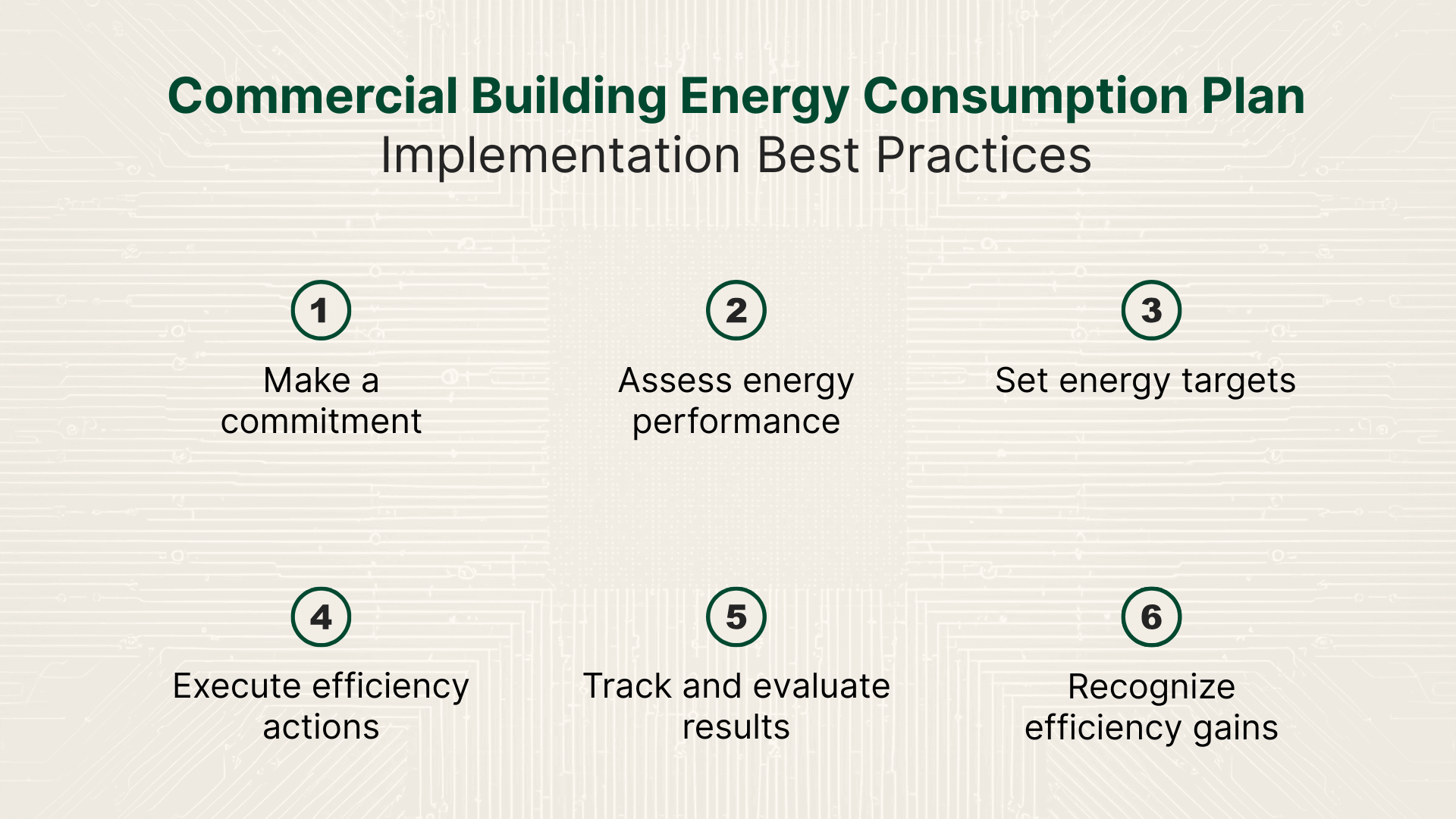
Want your CRE firm to become more energy efficient? Follow these simple steps:
- Commit: Allocate staff and funding to support continuous improvement in energy performance. Assign responsibility for energy management and secure budget approval for audits, upgrades, and ongoing monitoring.
- Assess performance: Conduct comprehensive energy audits that measure consumption across HVAC, lighting, water heating, and the building envelope. Benchmark performance against similar properties to identify deviations and prioritize high-impact opportunities.
- Set goals: Define clear, measurable energy-saving targets tied to specific timelines and properties. Goals might target percentage reductions in HVAC energy consumption in commercial buildings, lighting efficiency improvements, or portfolio-wide consumption decreases.
- Implement an action plan: Develop processes for executing energy-saving measures in commercial buildings. Coordinate vendors and track work order management solutions for efficiency and transparency.
- Evaluate progress: Review consumption data through an operations dashboard that tracks property management KPIs and compares results to performance goals.
- Recognize achievements: Publicize energy efficiency improvements in commercial buildings to sustain organizational support and reinforce the property's commitment to sustainable property management through green building certifications.
Why does commercial real estate energy efficiency matter?
Commercial building systems account for 40% of America's total energy consumption, making them significant contributors to carbon emissions and climate impact. High energy use in commercial buildings also creates larger utility bills, accelerates equipment wear, and puts properties at a disadvantage when tenants compare operating costs during lease negotiations.
Cities including New York, Washington DC, and Boston enforce energy disclosure requirements and performance compliance mandates that penalize buildings exceeding consumption thresholds through fines and restricted sale options. Lenders incorporate energy performance into risk assessments, making efficiency a financing factor. Meanwhile, energy efficient office buildings and energy efficiency in industrial buildings support accurate tenant billing by reducing base building consumption allocated across occupants, preventing disputes that strain lease renewals. HVAC energy consumption in commercial buildings offers the largest reduction opportunity, making HVAC maintenance software and building compliance software essential for managing CRE energy efficiency.
Top energy-saving measures in commercial buildings
Energy efficiency improvements in commercial buildings reduce operating costs and extend equipment life by addressing the systems responsible for the majority of consumption.
Conducting energy audits to identify consumption patterns
Energy audits assess how buildings consume power by measuring commercial building energy consumption across HVAC systems, lighting, water heating, and the building envelope. The audit documents baseline consumption and identifies where energy escapes through air leaks, inefficient equipment operation, or outdated controls. Property teams use this data to benchmark performance and prioritize next steps.
Optimizing HVAC systems through maintenance and controls
Regular equipment maintenance keeps HVAC systems operating at their designed efficiency levels by addressing the deterioration that increases HVAC energy consumption in commercial buildings over time. HVAC maintenance software supports these improvements by automating preventive maintenance and predictive maintenance schedules that address filter changes, coil cleanings, and calibration checks, while tracking service histories that show when systems begin consuming more energy than baseline measurements indicate.
Upgrading to LED lighting and automated controls
LED lighting consumes significantly less energy than incandescent bulbs while lasting substantially longer, delivering immediate consumption reductions and lower maintenance costs that support energy efficiency in office buildings. The transition to LEDs becomes more effective when combined with occupancy sensors, timers, and daylight harvesting systems that turn lights off automatically in unoccupied spaces or when natural light is sufficient. Smart buildings integrate these lighting controls with building operations platforms that track energy use and adjust settings based on occupancy patterns.
Enhancing the building envelope to reduce heating and cooling load
Upgrading insulation reduces heat transfer that forces systems to run longer cycles, while sealing air leaks around windows and doors prevents temperature loss that creates comfort complaints and increases runtime. And window improvements through double-pane glass, reflective coatings, or treatments address the heating and cooling energy that windows are responsible for losing, creating energy-saving measures in commercial buildings that reduce HVAC load.
Adopting PropTech for real-time monitoring
AI property management software integrates asset tagging systems and others into centralized control platforms that monitor energy use in real time and adjust operations accordingly. PropTech and other AI in commercial real estate systems track consumption patterns, identify inefficiencies as they develop, and optimize equipment schedules based on live data. Commercial real estate data analytics can be used to inform adjustments that reduce waste and maintain tenant experience.
What does energy efficiency in commercial buildings look like with Visitt?
Visitt supports energy efficiency improvements by helping teams monitor asset performance and reduce waste through proactive maintenance. Well-maintained HVAC units, lighting controls, and mechanical equipment consume less energy than systems allowed to drift from their calibrated settings or operate with worn components. But with Visitt, these issues don't compound over time. The platform automates recurring maintenance schedules that address these deterioration points before they affect performance, ensuring systems maintain their intended energy profiles through:
- Digital inspections that capture photos of refrigerant leaks, faulty dampers, or sensors that have fallen out of calibration, converting findings directly into work orders with supporting evidence attached
- AI-powered work order detection that analyzes commercial property inspection notes and operational data to surface recurring problems affecting energy use, such as airflow imbalances or equipment failures that increase electrical draw
- Vendor management tools that coordinate energy-saving upgrades and service providers across properties, tracking certifications and performance history, so external contractors work efficiently
As a broader building operations platform, Visitt contributes to energy-saving measures across office buildings and industrial properties by improving maintenance execution and system reliability. The platform centralizes workflows with tenant communication tools, resource management software, and risk management processes that support daily operations.
See what smarter energy efficiency can do for your commercial real estate portfolio