HVAC Maintenance Software: What Commercial Building Teams Need to Know
Key takeaways:
HVAC maintenance software structures how climate systems are serviced by connecting equipment records with preventive schedules and vendor coordination across commercial portfolios.
HVAC systems that lack structured maintenance often fail before reaching their expected 15- to 20-year lifespan, forcing premature replacements that drain capital budgets while disrupting tenant operations and compromising building safety.
Visitt's integrated workflows and AI-driven work order management analyze inspection data to identify performance issues early, giving teams clearer visibility into HVAC conditions and more consistent maintenance execution.
What is HVAC maintenance software?
HVAC maintenance software is a platform that helps maintenance teams manage the scheduling, documentation, and the service coordination and preventive maintenance needed to keep climate control systems running across buildings through the equipment's full lifecycle.
HVAC stands for:
- Heating - elements like furnaces and boilers that raise building temperature through ductwork
- Ventilation - systems that bring outside air into interior spaces to maintain healthy air quality
- Air conditioning - units that remove heat and circulate cooled air throughout the building
HVAC systems use thermostats and control systems to manage temperature zones, along with ductwork and distribution systems to deliver the conditioned air.
How does HVAC maintenance software structure commercial HVAC maintenance services?
The software helps commercial real estate (CRE) property management teams structure how heating and cooling systems are serviced by tying recurring service schedules to each unit's operating history and repair records. This allows maintenance teams to address commercial HVAC maintenance issues during planned work, coordinate technicians around system access and downtime windows, and record completed repairs in the same system, reducing emergency callouts and supporting longer equipment life.
HVAC maintenance software for commercial buildings typically enables the following capabilities:
- Work order management that creates, assigns, and tracks maintenance tasks
- Preventive maintenance scheduling that automates recurring service appointments
- Asset tagging systems that maintain records of make, model, installation dates, warranty status, and complete service histories for every unit
- Vendor management that coordinates external HVAC service providers, tracks certifications, and monitors performance across the portfolio
- Mobile tools for field technicians that enable on-site documentation, photo capture, and real-time updates
- Digital inspections that standardize checklists, capture condition data, and link findings directly to specific units and their maintenance records
- Inventory management that tracks parts usage and supports faster repairs
- Document management that serves as the foundation for commercial real estate data analytics and generates audit-ready records for tenant agreements, regulatory requirements, and insurance validation
- Risk management workflows that identify HVAC-related compliance gaps and failure patterns early, reducing outage risk and contractual exposure.
- Integration with facility management and amenities management platforms that connect HVAC workflows with broader building operations, supporting tenant experience
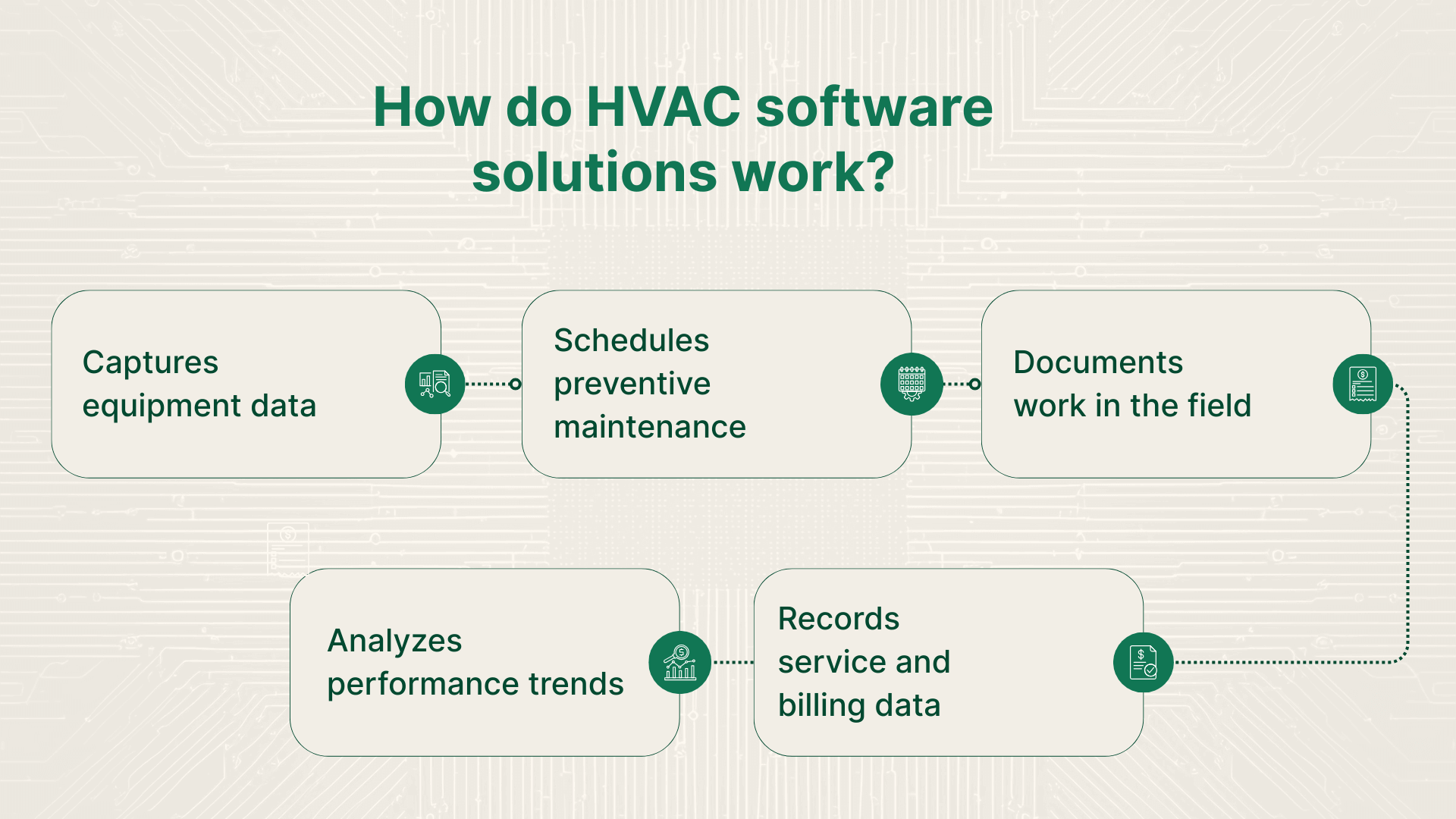
How do HVAC software solutions work?
Air conditioning maintenance software connects equipment records, service schedules, and field documentation as follows:
- Equipment data enters the system. HVAC software solutions capture unit details such as make, model, location, installation date, and warranty terms.
- Preventive maintenance schedules generate automatically. HVAC preventive maintenance software creates recurring work orders that are assigned to internal teams or external providers based on skillset and availability.
- Field teams document work through mobile tools. HVAC maintenance tools allow technicians to access work orders and checklists on-site, then record photos, meter readings, and condition notes directly in the field.
- Completion data feeds reporting and billing. Labor hours, parts usage, and system readings update service histories, support HVAC maintenance agreement software billing, and generate records needed for compliance and audits.
- Historical data informs decisions. Aggregated repair frequency, cost patterns, and performance trends help property managers identify systems nearing end-of-life and prioritize capital projects based on live equipment behavior.
Why do CRE firms need service software for HVAC?
HVAC systems represent significant capital investment and ongoing operational expense across commercial portfolios. The average lifespan of an HVAC system ranges from 15 to 20 years when properly maintained, but systems without structured maintenance often fail before reaching their expected lifecycle, forcing premature replacements that drain capital budgets, disrupt tenant operations, compromise building safety, and place building users at risk. That said, organisations that follow operations and maintenance best practices can save on time, resources, energy, and service bills, promoting more sustainable property management.
How are HVAC software solutions used by CRE teams?
HVAC maintenance for commercial buildings becomes more proactive when teams work with software that brings building systems into one shared view, across common applications.
Tracking equipment inventory and service histories across properties
Property managers rely on accurate records for every HVAC unit across their portfolio to support day-to-day decisions and long-term planning. HVAC maintenance software centralizes this information so teams can review complete service histories when scheduling repairs or responding to tenant complaints. Over time, the data shows clear performance patterns. These feed directly into budgeting cycles, allowing asset managers to forecast timelines and build capital plans based on live equipment conditions.
Scheduling preventive maintenance to reduce emergency breakdowns
Preventive maintenance scheduling software for HVAC keeps systems running between tenant occupancy periods and seasonal demand peaks. The software automates recurring service appointments based on manufacturer recommendations, runtime hours, or custom intervals tied to building use. When a scheduled filter change or coil cleaning comes due, the system generates a work order with the specific unit location and previous service notes. This reduces the emergency calls that disrupt tenant operations and cost significantly more than planned maintenance. AI-driven work order detection takes this a step further, reviewing inspection data to flag units approaching failure thresholds and inform predictive maintenance activities as needed by individual HVAC assets.
Managing vendor networks and HVAC maintenance agreements
CRE teams coordinate external HVAC service providers across multiple buildings, often under different maintenance agreements with varying coverage terms. Vendor and contractor management features track COIs and property management KPIs (performance metrics) so property managers can compare local providers and meet service obligations. For example, when a rooftop unit needs immediate attention, the platform shows which certified contractors are available and how they have performed on similar work in the past, so scheduling happens without delay. Once the work is completed, approved charges flow into vendor invoice management workflows, reducing disputes and preventing extended downtime.
Supporting compliance and tenant reporting requirements
Property teams are expected to document HVAC maintenance in ways that satisfy lease terms, compliance requirements, and tenant communications expectations. HVAC maintenance software organizes this information at the unit level, recording inspections, findings, and corrective work as it occurs. Tenant apps and tenant communication tools give tenants a structured way to report comfort issues, attach details like photos or room locations, and track the status of follow-up. The same documentation supports building compliance software workflows and reporting aligned with BOMA standards, essential for audits, insurance claims, and warranty validation when equipment issues arise.
What does HVAC maintenance look like with Visitt?
Visitt centralizes HVAC work orders, preventive maintenance schedules, digital inspections, and vendor coordination so teams manage climate systems alongside other building assets, for more centralized equipment lifecycle management. Automated schedules keep recurring maintenance on track, and reminders reach the right technicians before service windows close. When an inspection reveals a declining compressor or a failed filter check, the platform creates a work order and follows the repair through to completion.
The platform captures equipment specifications, service logs, and technician signatures as work is completed, keeping HVAC records accurate and audit-ready. Digital inspections standardize how technicians document their work, using photos and meter readings that connect each task directly to the unit's service history. Visitt's AI-driven work order detection analyzes inspection notes and operational data to identify temperature inconsistencies or abnormal runtime patterns early, allowing teams to address issues before they escalate into system failures.
HVAC maintenance agreements are automatically tracked across defined service requirements and renewal cycles, keeping coverage aligned with asset needs. External service providers operate through the same interface, with certifications, insurance documents, and performance history visible across the portfolio. These workflows connect with tenant communication tools, resource management software, and facility management processes, supporting coordinated daily CRE operations.
See what smarter HVAC maintenance software can do for your portfolio