Product Releases
Sep 30, 2026
How CRE Operators Prove ROI From Building Operations Software
Five steps to go from "it feels valuable" to a business case your buying committee approves.
This isn't another preventive maintenance checklist blog post running through what to inspect. We focus on the how and why that turn building checklists into actionable workflows.

You maintain commercial properties where different stakeholders evaluate cost against success through different lenses:
These concerns form the foundation for how commercial properties are maintained. Building preventive maintenance checklists helps teams organize complex schedules across dozens of assets, standardize implementation across properties, and create clear communication channels between teams. This promotes regulatory compliance and energy efficiency in commercial buildings.
The International Facility Management Association reports that preventive programs account for 54% of all maintenance costs. But do your checklists actually prevent failures or just document them after tenants complain?
Most HVAC preventive maintenance checklists tell you what to check: filters, thermostats, refrigerant levels, and electrical connections. An air conditioning preventive maintenance checklist might add condenser coil cleaning and drain line inspection. But the same reading can point to different root causes, and checklists that only capture the what leave technicians guessing the why.
To turn an equipment preventive maintenance checklist into a consistently scalable workflow:
With Visitt, your facilities' preventive maintenance checklist becomes the source of actionable workflows that trigger work orders and prevent costly downtime.
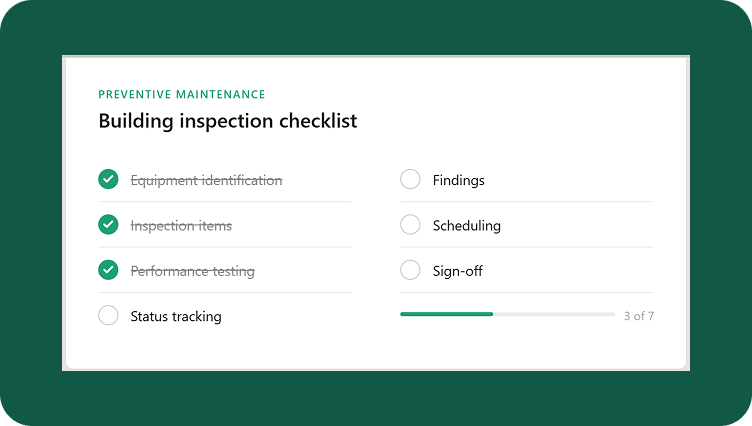
When a technician logs "3rd floor smoke detector battery replaced" without a unique asset ID, and another 3rd-floor smoke detector beeps incessantly a month later, there’s no way of knowing if it’s the same one. Maybe the battery isn't the problem. Maybe the detector itself is failing or the tenant in Suite 304 is using a hotplate to make mac and cheese for lunch.
Precise identification ensures inspection data flows into the correct asset record:
Next time, you’ll replace the detector or address the tenant's behavior instead of the batteries.
When criteria are measurable, inspections produce data your CMMS can track over time, informing budget and inventory decisions, in addition to asset maintenance activities.
Measurable inspection criteria include:
Performance testing catches what visual checks miss:
Pass/fail tracking misses the equipment that's degrading but still functional. Meanwhile, status tied to measurable thresholds tells your preventive maintenance software whether to schedule follow-up, create a work order, or log the inspection and move on.
Status options need to capture decline, not just pass/fail:
Your technician notes a frayed electrical wire during an inspection. The completed checklist goes to the property manager, who means to create a work order but gets pulled into tenant emergencies. Days later, the wire shorts and an entire floor goes dark.
That’s why findings need to trigger action automatically:
Usage-based scheduling adjusts frequency to actual operational intensity:
Digital sign-off in facility management software creates an audit trail for regulatory compliance, supports tenant insurance or vendor insurance claims when equipment fails despite documented maintenance, and identifies training gaps when specific technicians consistently miss issues others catch.
Sign-off fields should include:
Anyone can create a sample preventive maintenance checklist. Visitt built a platform that turns your preventive maintenance checklist into consistent action through predictive insights with AI preventive maintenance that empowers teams on the go.
Every preventive maintenance checklist for building operations triggers automated schedules, surfaces predictive alerts across properties, and shows which buildings stay ahead of failures and which need attention.
If you’re looking to boost your firm’s operational impact through proactive, preventive maintenance, talk to our team and explore how we can work together.
Equipment identification, inspection items with measurable pass/fail criteria, performance readings with acceptable ranges, and findings that trigger follow-up work orders. The goal is eliminating guesswork. Technicians should know exactly what passes inspection and what requires immediate attention without interpreting vague observations or making judgment calls.
Frequency depends on the equipment and operational criticality. HVAC systems typically need monthly filter checks and quarterly performance tests. Elevators require monthly inspections. Fire safety systems need quarterly testing. Critical equipment in high-traffic buildings often requires more frequent checks than the same equipment in low-occupancy properties.
A checklist is the documentation tool technicians use during inspections. A preventive maintenance program is the complete system that schedules work, assigns responsibilities, tracks completion, analyzes failure patterns, and adjusts frequencies based on performance data. The checklist helps technicians capture information. The program ensures the captured information is transformed into action across your portfolio.
Templates provide a starting framework, but commercial buildings require customization based on equipment types, tenant requirements, and operational intensity. For example, an office building's HVAC checklist differs from an industrial facility's. The core structure is similar, but specific items, acceptable ranges, and frequencies must match your building's actual equipment and usage.
In Visitt, checklists become automated workflows. Set up preventive maintenance schedules based on your building standards and SLAs. Digital checklists trigger automatically, route to assigned technicians, and capture findings in real-time. When items fail inspection, the system generates follow-up work orders. Completion data feeds portfolio-wide dashboards showing which buildings stay ahead of failures.


Insights, trends, and practical ideas for smarter commercial real estate operations.

Discover how Visitt transforms operations and tenant
experience, portfolio-wide.