Product Releases
Sep 30, 2026
How CRE Operators Prove ROI From Building Operations Software
Five steps to go from "it feels valuable" to a business case your buying committee approves.
From lease signing to long-term retention, this is everything you need to know to practically make the most of your commercial spaces following leasehold improvement requests.
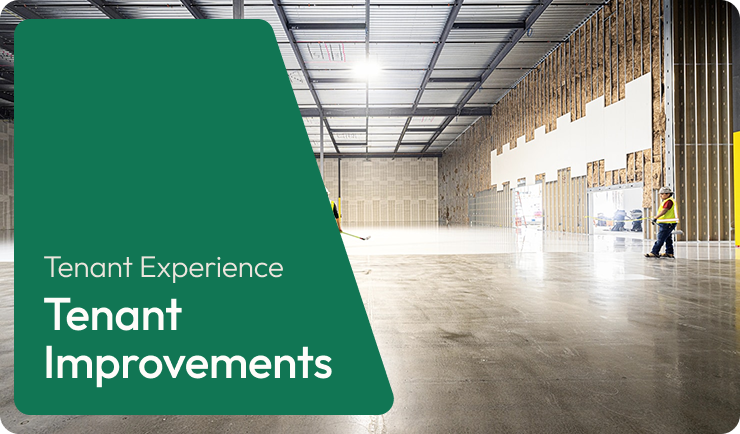
As a building manager or operator, you oversee commercial properties where a tenant improvement (TI) request triggers a different set of questions depending on who receives it:
Commercial tenant improvements, also called leasehold improvements, are interior modifications that directly affect whether a tenant renews. JLL found that re-letting a commercial space costs more than twice what retaining a tenant requires and can reach the full value of an annual net rent. Most property owners underestimate the total because vacancy and refurbishment are visible, but leasing commissions and the full marketing period rarely make it into the calculation.
Given the high cost of losing tenants and Visitt's mission to deliver the kind of building operations that keep them, this practical guide covers every stage of the process, from how the TI agreement gets structured to what tenant experience looks like once the space is occupied.
Lease negotiations determine which of the following TI structures apply:
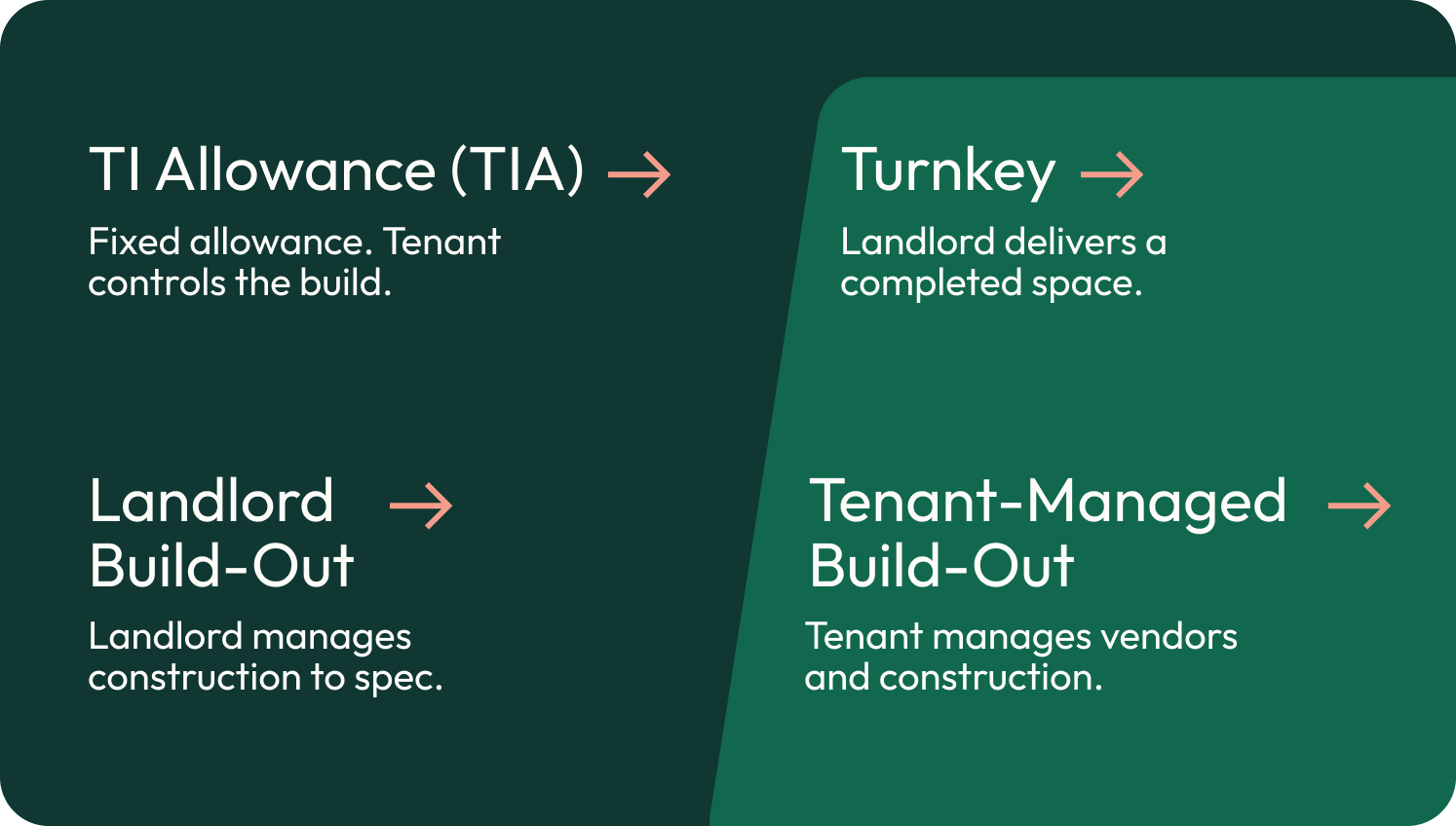
In a soft market where vacancy is high, tenants have more leverage to push for a higher allowance or a full landlord build-out. When vacancy tightens, landlords offer less, and tenant-managed models become more common.
Note that regardless of which model the build-out runs through, tenants improvements and betterments stay with the property at lease end. That has direct implications for how your team approaches capital expenditure planning and how insurance coverage gets structured at renewal.
Needs assessment
Budget
Design
Permits
Contractor selection
Timeline
Running a tight tenant improvement build-out comes down to a consistent set of practices your team controls directly. Your ability to see all building operations through a single operations dashboard during the construction phase can help you implement and enforce the following best practices:
Certificate of occupancy and closeout
Post-occupancy communication
Visitt connects the operational work of a tenant improvement project to the tenant relationship that follows it. During the build-out, vendor documentation and certificates of insurance stay organized in one platform without switching between systems.
Once a tenant takes occupancy, maintenance management workflows route requests from newly installed systems to the right team member with full asset context, and the tenant app keeps communication direct from move-in through renewal. Every example of a leasehold improvement your team delivers connects to the workflows that protect tenant satisfaction and long-term occupancy.
If that sounds like an improvement on your current workflows, talk to our team and explore how we can work together.
Tenant improvements (TI) are interior modifications made to a leased commercial space to fit a specific tenant's needs. They cover everything from cosmetic updates like new flooring and lighting to structural work such as HVAC upgrades or a full layout reconfiguration.
Leasehold improvements span a wide range of interior modifications, including:
Tenant improvements and betterments coverage protects upgrades a tenant paid for inside a leased space. If a covered loss damages those improvements, this insurance helps cover repair or replacement costs, so tenants are not left rebuilding custom buildouts entirely at their own expense.
Tenant improvements give both parties leverage during negotiations. Tenants can negotiate a higher TI allowance in exchange for a longer lease term, and landlords use competitive TI packages to attract and retain quality tenants. A clear TI agreement also makes renewals more straightforward for both sides.
Visitt connects vendor coordination, maintenance requests, and tenant communication in one platform, so building operators stay on top of every stage of a TI project, from managing contractors during construction to keeping tenants informed and responsive long after move-in.


Insights, trends, and practical ideas for smarter commercial real estate operations.

Discover how Visitt transforms operations and tenant
experience, portfolio-wide.