Product Releases
Sep 30, 2026
How CRE Operators Prove ROI From Building Operations Software
Five steps to go from "it feels valuable" to a business case your buying committee approves.
They treat commercial HVAC maintenance as an operational system, built on data and proactive consistency.
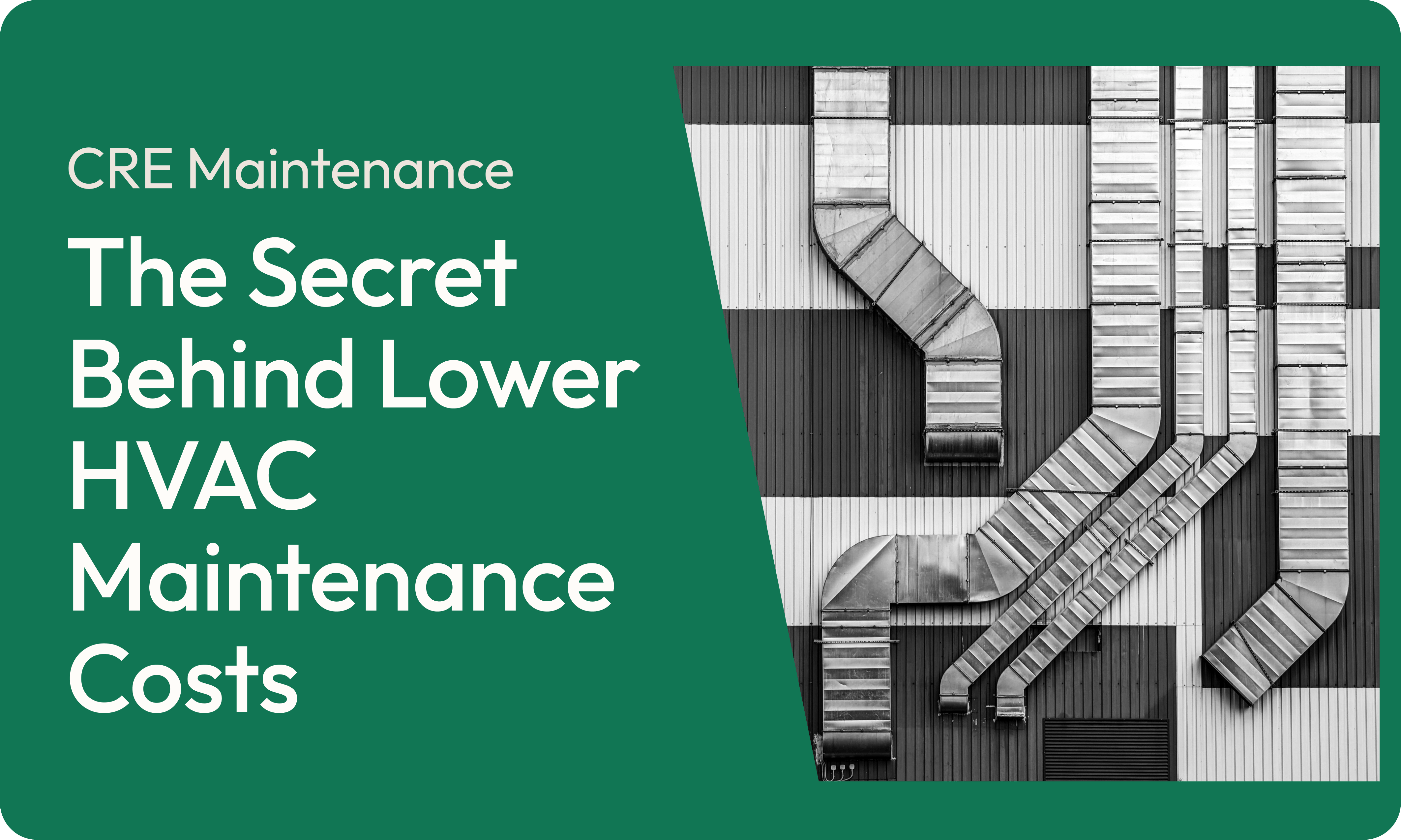
Every business wants to make the most of its investment, and, for the most part, the financial levers are straightforward: grow revenue or cut costs. For commercial real estate firms, growing revenue means scaling the portfolio. Cutting costs means finding the inefficiencies that are quietly draining it and resolving them.
Energy is one of the biggest places where those inefficiencies hide. HVAC systems account for roughly 40% of total energy consumption across American commercial buildings, according to the U.S. Department of Energy. Without a proactive commercial HVAC maintenance plan behind daily building operations, that number is at constant risk of climbing. Surprise repair costs, tenant-facing downtime, and sustainability targets that property teams struggle to meet are rarely isolated problems. They tend to share the same root.
What Visitt sees across assets and portfolios is that the properties spending less on HVAC maintenance for commercial buildings are all doing the same thing. Below is what that looks like in practice.
The CRE firms spending less on HVAC and keeping buildings running reliably share a general approach: they know exactly what deferred maintenance is costing them, and they have a plan to address it before costs compound:
The CRE firms on the right side of those numbers run commercial HVAC maintenance as a proactive operational discipline, built on live asset data that’s supported by strategies integrating structured preventive maintenance and consistent facility management practices to keep exposure from building up in the first place.
Leading property teams implement strong commercial HVAC maintenance plans that promote sustainable property management and energy efficiency in commercial buildings without disrupting the people inside them.
Commercial HVAC preventive maintenance is the most direct way to keep energy consumption in check and equipment performing at capacity. A structured schedule gives property teams a consistent, repeatable process for servicing systems based on defined intervals, building a maintenance record that supports accurate budgeting and longer asset lifecycle management across the portfolio.
A structured schedule builds the foundation. Predictive maintenance uses AI and live asset data to identify early signs of wear or performance decline, even before your scheduled preventive maintenance visits, further preventing the commercial HVAC maintenance cost of addressing issues from spiking.
Day-to-day system configuration has as much impact on energy consumption and wear as the maintenance schedule behind it. Aligning system operation with building demand and scheduling service windows around occupancy patterns keeps AC commercial property management costs predictable and protects tenant experience across the portfolio.
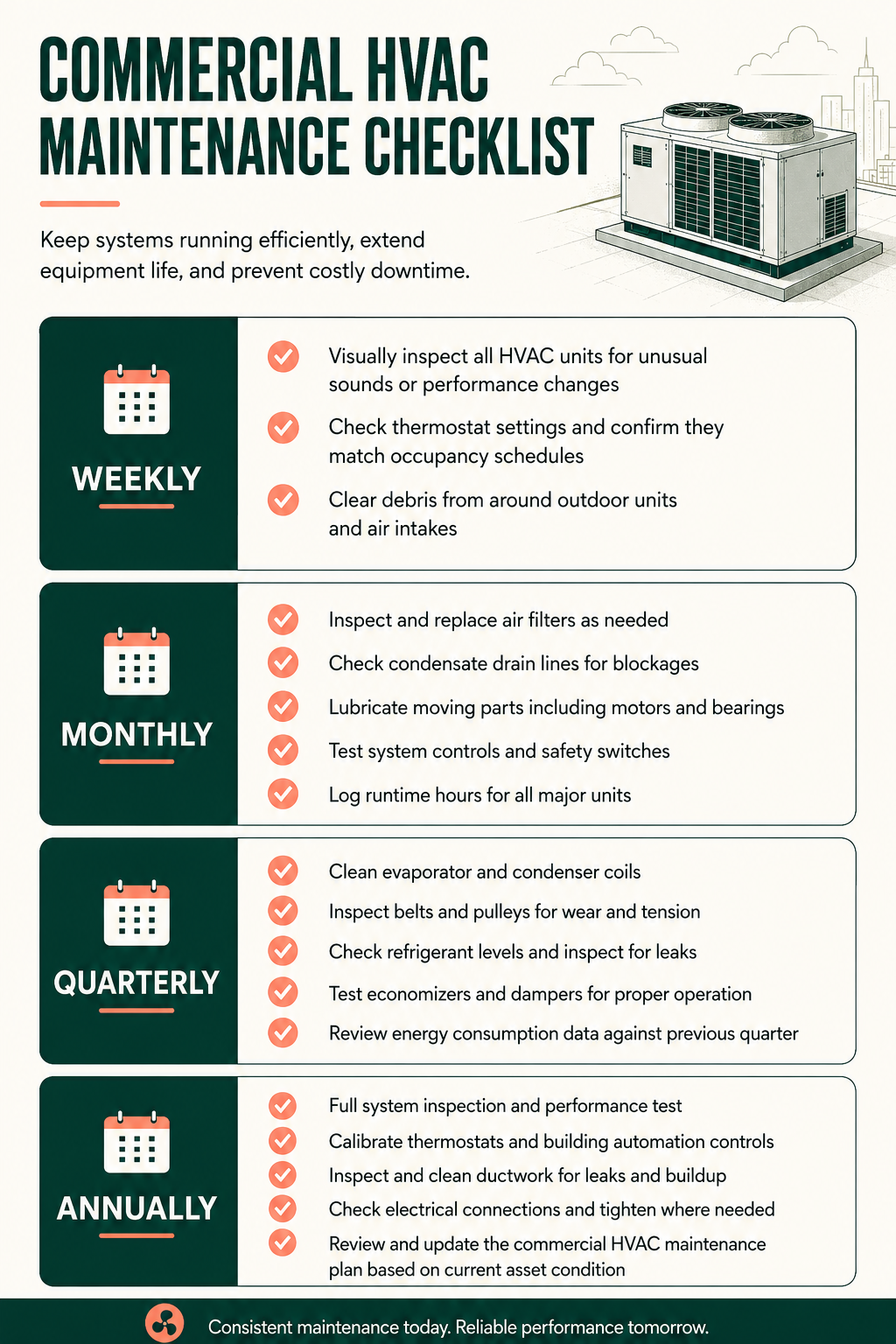
The tasks below cover every critical maintenance activity across your commercial HVAC system, organized by frequency.
Putting a structured commercial HVAC maintenance plan into practice across a portfolio requires a system that connects inspections, work orders, and asset data in one place, and surfaces the right information to the right people before issues escalate. AI is what makes that level of consistency achievable at scale.
Visitt’s AI-powered Commercial Real Estate building operations platform is built for CRE management teams managing HVAC maintenance and commercial property maintenance across their portfolios. The platform centralizes recurring maintenance schedules, digital commercial property inspections, and work order management in one mobile-first system, with automated alerts that escalate urgent issues before they reach tenants. When an inspection flags a declining component or abnormal runtime pattern, Visitt generates a work order instantly and tracks it through to resolution, keeping HVAC maintenance software records current and equipment history accurate across every building in the portfolio.
If your team is ready to extend the lifespan of your HVAC assets, reduce capital expenditure costs, and keep energy consumption in check year-round, talk to our team and explore how we can work together.
Twice a year is the standard starting point, before cooling season and again before heating season. However, the type of building and its usage can impact this need. The most reliable programs set service intervals based on live system data, allowing for proactive measures to be taken before failures occur.
Consistently, yes. Well-maintained systems need fewer emergency repairs, run more efficiently, and last significantly longer than those managed reactively. For most property teams, a structured preventive program pays for itself through avoided repairs and deferred equipment replacement.
HVAC is one of the highest-impact systems a property team can focus on when working toward more sustainable energy use. Keeping it well-maintained directly reduces a building's energy consumption, which flows through to lower operating costs and a smaller carbon footprint. For portfolio-level sustainability goals, it's a practical place to start.
It keeps service schedules, inspection records, and vendor coordination in one place instead of spread across spreadsheets and inboxes. Good software manages the full equipment lifecycle, so recurring maintenance stays on track and nothing falls through the cracks between one technician visit and the next.
Visitt’s AI connects HVAC work orders, preventive maintenance schedules, and inspections in one platform alongside all other building operations. When an inspection flags a problem, a work order gets created and tracked through to resolution. Equipment history and service logs stay current as tasks are completed across buildings.


Insights, trends, and practical ideas for smarter commercial real estate operations.

Discover how Visitt transforms operations and tenant
experience, portfolio-wide.