
Product Releases
Sep 30, 2026
How CRE Operators Prove ROI From Building Operations Software
Five steps to go from "it feels valuable" to a business case your buying committee approves.
Property teams evaluate work order systems by comparing features before understanding their operational gaps. Successful evaluations start by defining what the system needs to accomplish.
Commercial real estate portfolios generate massive amounts of work orders. That said, the more hands that touch each request, the more opportunities there are for breakdowns between work order generation and completion:
When work order management isn’t a work order system, recurring problems never get connected to their root cause, and communication breaks down. Tenant experience degrades, potentially affecting renewal rates, firm reputation, and ultimately, property valuation.
The technology exists to fix this. Research from McKinsey shows 60 to 70% of maintenance activities are automatable with current technology, and Gartner estimated a reduction of operational expenses by up to 30% as early as 2021. The market flooded with solutions in response: work order management systems, facility management software, CMMS systems, and AI-powered tools, all promising to streamline operations.
But with dozens of vendors making similar claims, property teams face decision fatigue. How do you identify which system fits the way your operations work today and the scale you need tomorrow?
When property teams discover the platform doesn't fit their building operations, it’s often because they compared what work order software can do instead of documenting what their operations need.
Leading property teams evaluate systems using this approach :
Teams that follow these steps select the right platform for the right reasons.
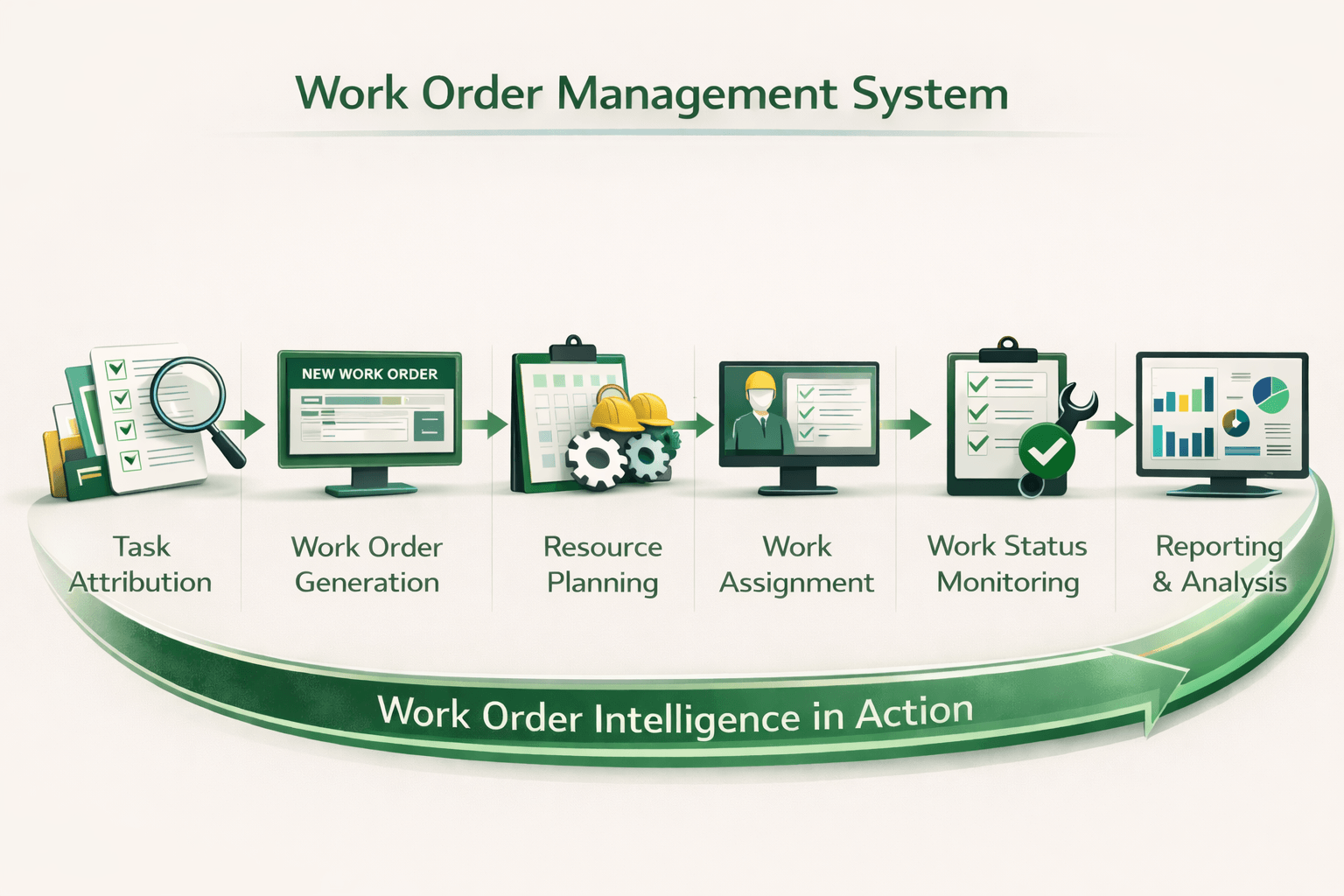
With Visitt, work orders become the source of actionable intelligence. Here’s what to look for to cut through the “vendor noise” and find the right fit.
Work order management software delivers the most value when teams use it consistently. Property teams need interfaces where assigning, updating, and closing work orders is intuitive.
Adoption indicators to test during evaluation:
Work order intelligence automates repetitive tasks through AI-powered categorization, duplicate detection, and smart assignment rules.
Portfolio-level visibility in a work order management platform connects commercial real estate property management requests to the patterns that drive resource draining, system failures, and response gaps that erode tenant satisfaction.
Dashboard views that span the entire portfolio share:
Real-time communication through tenant communication tools eliminates the email chains and phone tag that create frustration, even when maintenance teams respond within hours.
Tenant experience solutions include:
Field teams operate where connectivity is weak or nonexistent, but work orders still need completion and documentation. Offline functionality ensures technicians access without internet, with all data syncing automatically once connection restores.
What to look for:
Integrations create seamless data flow between platforms that accelerates daily operations while ensuring accuracy.
Facility management software treats work orders as maintenance tasks. CRE operations treat them as drivers of tenant experience and portfolio performance.
CRE-specific workflows that adapted FM tools can't replicate:
Visitt’s work order management system transforms how property teams handle service requests and tasks.
If you're looking to reduce response times and turn maintenance data into actionable intelligence across your portfolio, talk to our team and explore how we can work together.
A work order management system is a platform that tracks maintenance requests and service tasks from submission to completion. It assigns work to technicians, documents progress with photos and timestamps, automates preventive maintenance schedules, and creates accountability through digital records showing who did what work and when.
Look for tenant request submission with photo uploads, AI routing that assigns work based on technician expertise and location, and mobile apps with offline access. Automated preventive maintenance should generate work orders before equipment fails, and portfolio-level dashboards should show response times across all properties.
AI categorizes requests, detects duplicates when multiple tenants report the same issue, and assigns work based on request type and team availability. Meanwhile, sentiment analysis flags urgent or dissatisfied tenants for immediate attention, and SLA rules prioritize critical requests. Together, these capabilities make workflows actionable.
Yes. Visitt tracks labor, materials, and costs in each work order, then pushes billable items into MRI Software, Yardi Systems, or Rent Manager. Invoices, vendor costs, and tenant chargebacks sync across systems without spreadsheets or duplicate entry, creating seamless auditable workflows from work order to invoice.
Tenants submit requests through the Visitt+ app with photos and descriptions, then Visitt’s AI automatically categorizes issues and routes work to the right technician. Automation handles triage while teams focus on fixes and real-time notifications keep tenants informed without follow-up calls, for up to 3x better response times.


Insights, trends, and practical ideas for smarter commercial real estate operations.

Discover how Visitt transforms operations and tenant
experience, portfolio-wide.